

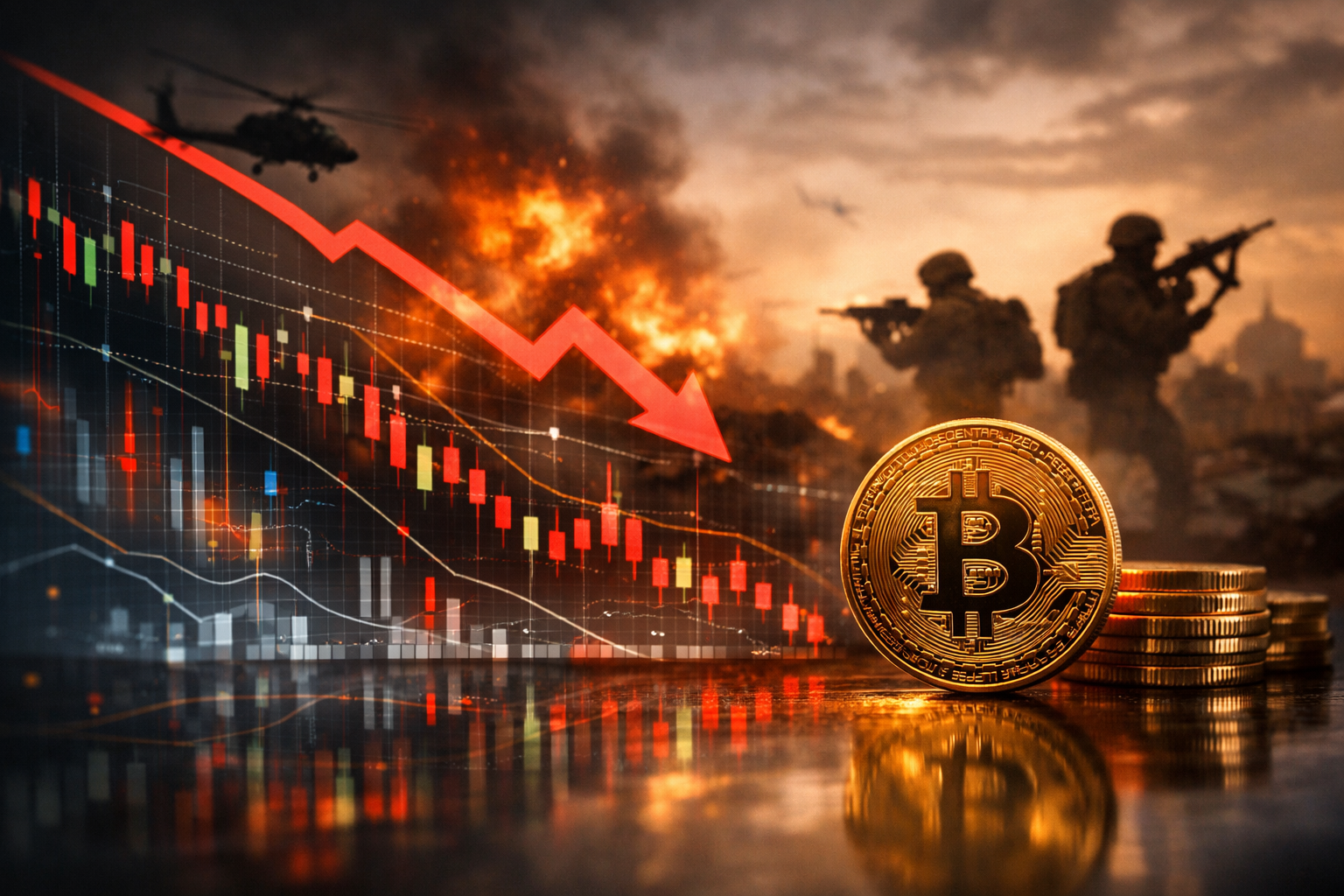

In a development that has caught the attention of both the financial market and crypto enthusiasts, Bitcoin’s price has retreated toward the $65,000 mark. This decline comes on the heels of warnings from former President Donald Trump regarding potential continued strikes by Iran against U.S. interests, raising concerns about geopolitical stability.
On April 2, 2026, Bitcoin, a leading cryptocurrency known for its volatility, appeared to be reacting to the uncertainty swirling in international relations. As tensions between the U.S. and Iran escalate, investors are closely monitoring how these geopolitical factors could impact not just traditional markets, but also the burgeoning digital asset space.
Bitcoin’s price drop is significant, especially as it had recently been riding a wave of bullish momentum, driven by increased institutional adoption and a broader acceptance of cryptocurrencies as a viable asset class. Now, the shadow of potential military conflict looms large over the digital currency ecosystem.
Trump’s comments have also reignited discussions around how external factors and political statements can influence crypto asset prices. Historical patterns show that significant geopolitical events can lead to knee-jerk reactions in the market, causing both short-term volatility and long-lasting effects on price trends.
The relationship between cryptocurrencies and global events remains complex and often unpredictable. As Bitcoin grapples with this latest hurdle, investors must navigate a landscape increasingly prone to rapid changes, driven not only by market data but also by the whims of political discourse.
As always, investors are advised to approach the market with caution, particularly in times of heightened uncertainty. With Bitcoin now hovering around the $65,000 mark, all eyes will be on the developments in Iran and any further statements from influential leaders both in the U.S. and beyond.
In conclusion, Bitcoin’s current price trajectory appears to be more than just a reflection of market forces—it embodies the interplay between technology, finance, and global affairs, illustrating how interconnected our world has become and how fragile this nexus can be.

