

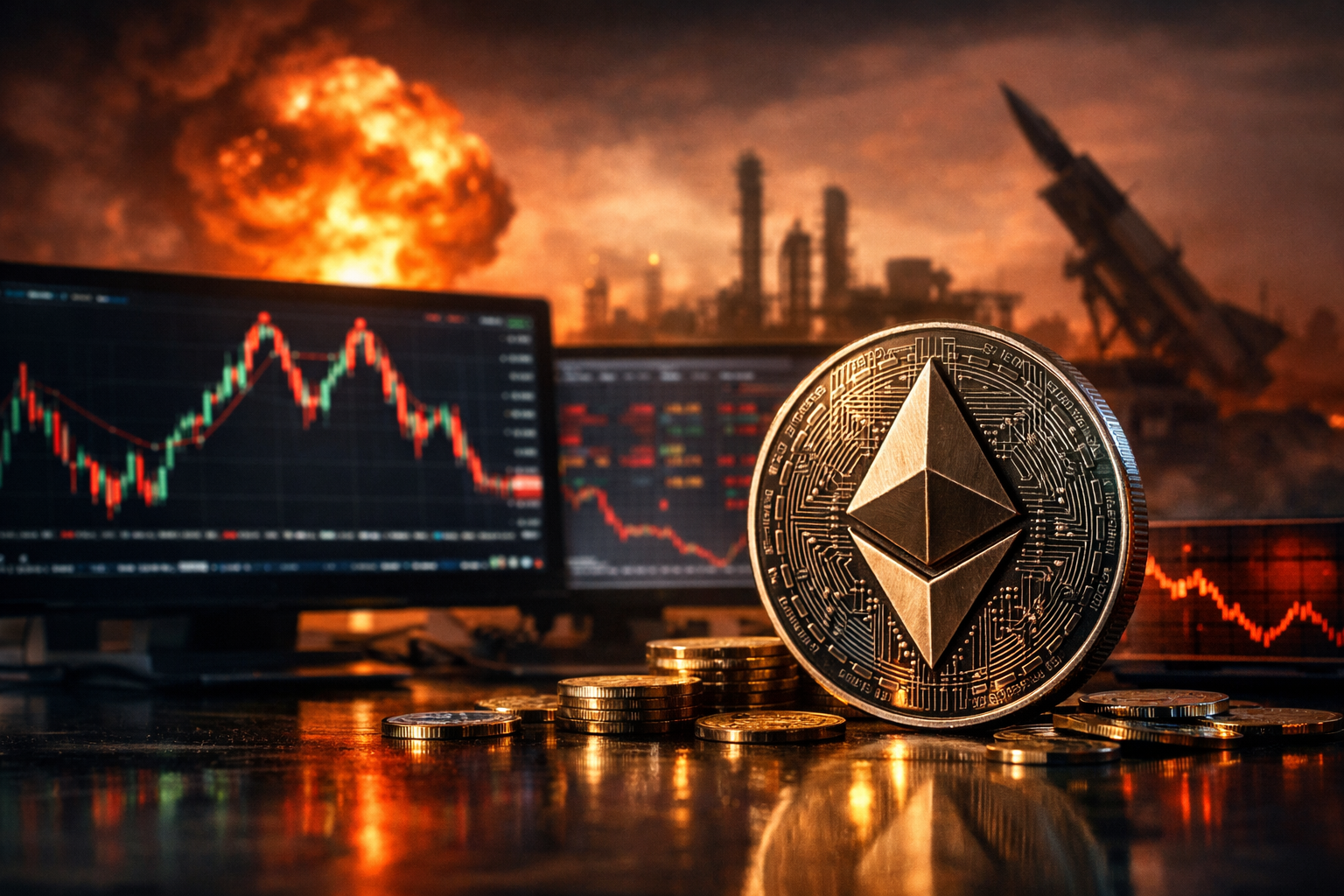

The cryptocurrency market is once again on edge as Ethereum (ETH) exhibits a concerning double top pattern in its price chart. This technical formation, which often signals potential reversals, has raised alarms among traders and analysts alike. With current market conditions heavily influenced by geopolitical developments, specifically increasing tensions in Iran, many are left wondering if Ethereum might face a substantial crash in the near future.
As of early April 2026, ETH had recently tested resistance levels around $2,200 before hitting a notable ceiling, establishing a classic double top formation. The last time Ethereum approached these levels, it faced a sharp correction, leaving many investors cautiously optimistic yet wary of a repeat scenario.
The backdrop to this market behavior is fraught with global uncertainty, particularly stemming from escalating conflicts in the Middle East. News reports suggest that tensions in Iran could lead to broader regional instability, with potential economic repercussions that could extend to international markets. In a landscape where sentiment can shift rapidly, the correlation between geopolitical stability and cryptocurrency performance remains crucial.
Historically, periods of heightened geopolitical risk have often led to increased volatility in the crypto markets. For Ethereum and its investors, this situation presents a critical juncture. Many traders are monitoring not only technical indicators but also news that could influence market psychology.
On social media, discussions among crypto enthusiasts reflect a blend of concern and resilience. Some anticipate that should Ethereum’s price continue to falter, it could open up opportunities for long-term investors to accumulate at lower prices. However, others caution against the broader implications of geopolitical issues, suggesting that such uncertainties could deter institutional investment and, therefore, affect Ethereum’s valuation.
The current market sentiment is further complicated by regulatory considerations. As governments worldwide scrutinize digital assets more closely, any adverse regulatory news could serve as an additional catalyst for price declines. Investors in Ethereum will need to stay vigilant, not only regarding technical analysis but also while keeping an eye on global events that could sway the market.
While Ethereum has a resilient community and a strong use case, particularly with the growth of decentralized finance (DeFi) and non-fungible tokens (NFTs), the imminent risks cannot be overlooked. Every trader should remain informed about both the technical signals and the geopolitical landscape as they navigate these uncertain waters.
In conclusion, the formation of a double top on Ethereum’s price chart, coupled with the rising tensions in Iran, certainly adds a layer of complexity to market predictions. Whether this will lead to a crash or a rebound remains to be seen, but one thing is for sure: the crypto community must remain agile and prepared for whatever comes next.

