

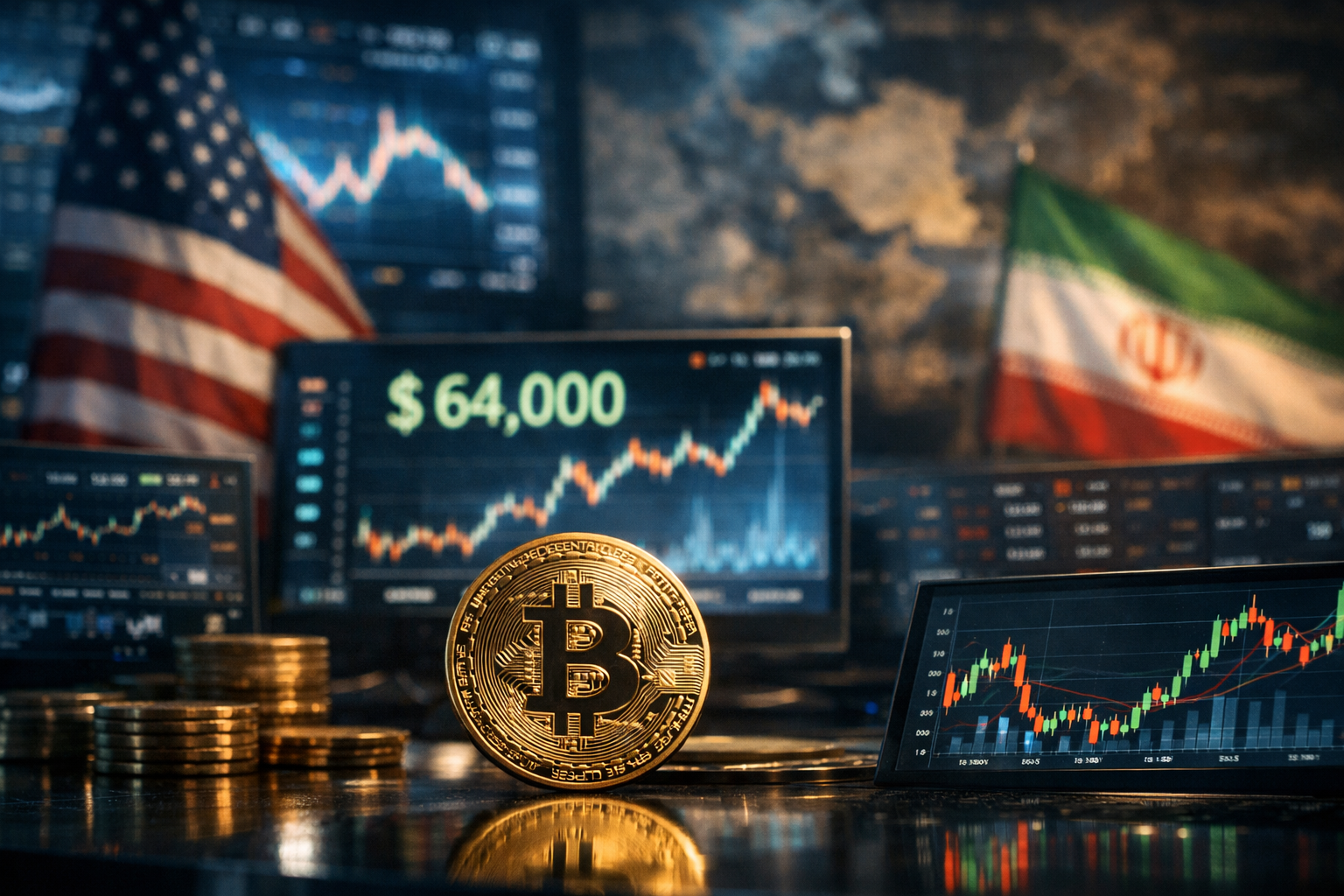

As international tensions ease with the progress of US-Iran discussions, Bitcoin has managed to maintain a solid position near the $64,000 mark. This stability comes amidst a backdrop of fluctuating global markets and varying reactions to geopolitical developments, where traditional assets seem to respond more vigorously compared to the world of cryptocurrencies.
On June 22, 2026, Bitcoin was trading at approximately $64,000, reflecting investor confidence that has remained resilient even as macroeconomic factors play a crucial role in shaping market sentiments. While Bitcoin’s price has shown considerable strength, the overall crypto market appears to be sitting on the sidelines, seemingly indifferent to the potential implications of these diplomatic conversations.
The ongoing negotiations between the US and Iran have been pivotal in shifting the dynamics of various asset classes. Traditional markets, including commodities and equities, have reacted with a mix of optimism and caution. However, cryptocurrencies, particularly Bitcoin, have exhibited a strikingly different behavior. Market analysts have noted that this could indicate a decoupling of crypto assets from traditional economic influences, suggesting a maturation of the crypto space.
Analysts are pointing out that as Bitcoin hovers near its current price level, it reflects a degree of separation from the volatility that has characterized its history. The digital currency has seen significant growth over the past year, and many industry experts believe that this is a crucial period for Bitcoin to solidify its position as a legitimate asset class.
Despite the current price stability, the broader cryptocurrency market remains largely stagnant, with many altcoins not following in Bitcoin’s footsteps. This divergence raises questions about investor sentiment and whether capital is becoming more selective within the crypto ecosystem. Investors are particularly cautious, given the historical propensity for cryptocurrencies to react sharply to news events.
Looking ahead, the gradual developments in US-Iran relations could bring about changes in market sentiment. If these discussions lead to an easing of sanctions or improved economic conditions, it could potentially have ripple effects across various financial markets, including cryptocurrencies. However, for now, Bitcoin seems to be holding its ground, untouched by the waves of geopolitical change.
As the cryptocurrency landscape continues to evolve, traders and investors will be watching closely to see if Bitcoin’s current stability can pave the way for future growth or if broader market dynamics will eventually pull the digital currency into the fray of volatility. For now, Bitcoin stands resilient at $64,000, a testament to its growing acceptance and potential as a cornerstone of the financial ecosystem.

