

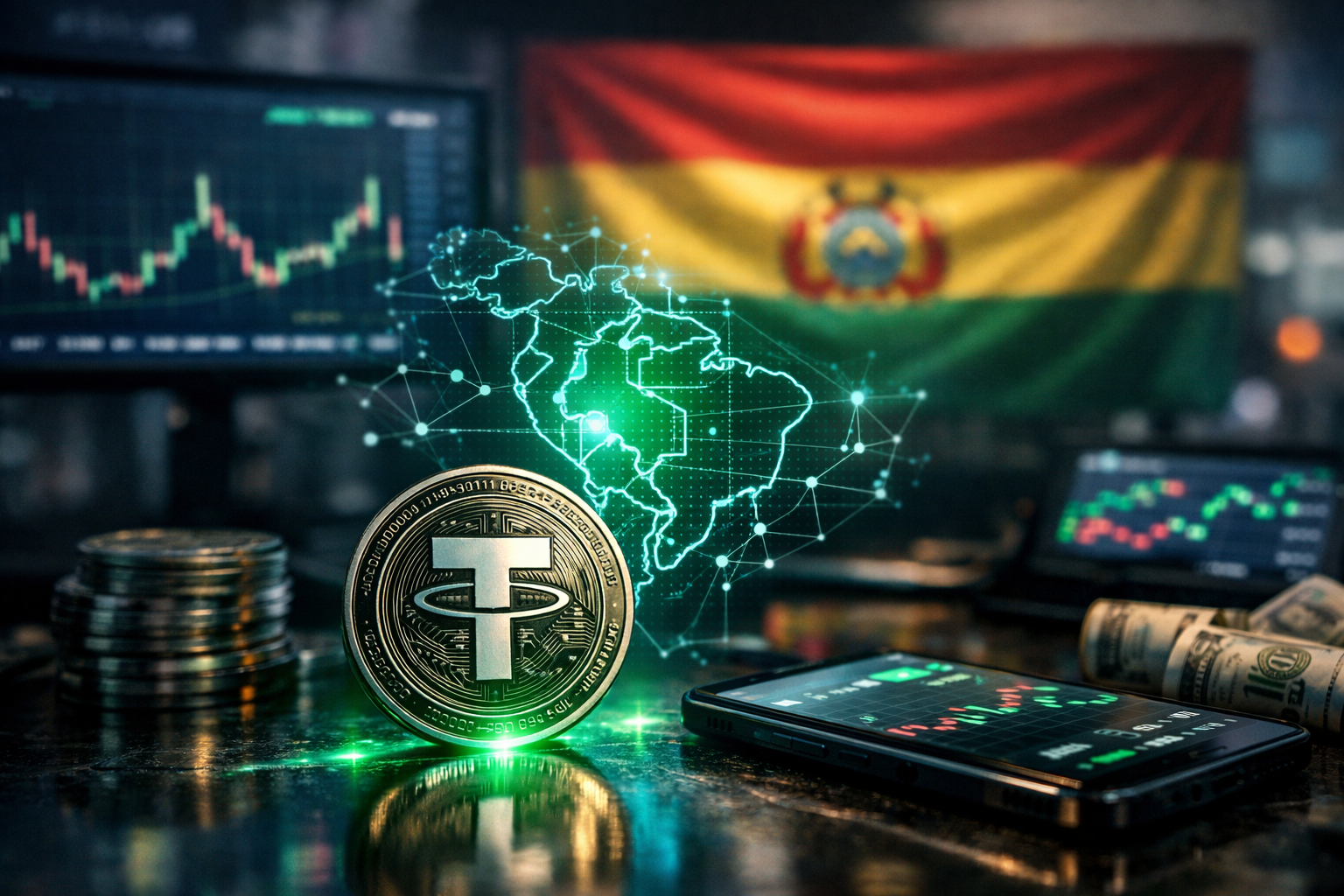

Bolivia is weighing a plan to make Tether’s USDT an officially recognized payment currency, placing it alongside the boliviano and the US dollar in its national payments system.
Economy and Public Finance Minister Jose Gabriel Espinoza confirmed the government is assessing a regulatory framework that would allow USDT to circulate “as just another currency” for everyday use, including payments, savings, and trade. While the framework is still under review and has not been formally adopted, the discussions mark a significant step towards integrating digital currencies into Bolivia’s financial ecosystem.
Dollar Shortage Driving the Push
Bolivia has been under severe foreign currency pressure for several years. Falling gas production has drastically cut export revenues, draining dollar reserves and leaving businesses and importers short of hard currency. The country maintained an official exchange rate of 6.86 bolivianos per US dollar for nearly a decade until earlier this year. The abandonment of this peg led to a parallel black-market dollar trade, with the dollar trading at a steep premium to the official rate.
This widening gap has pushed more Bolivians toward dollar-denominated alternatives. USDT has already started to fill this role, with retail stores accepting it for everyday goods, from dairy products to chocolate. The state energy company YPFB was also authorized to accept crypto payments for fuel imports as early as March 2025, marking the government’s first formal step toward integrating cryptocurrencies.
Banking Infrastructure Already in Place
Two Bolivian banks, Banco Unión and Banco FIE, already offer USDT-related services, indicating that much of the necessary infrastructure for wider adoption is already established. Official recognition of USDT would formalize what is already happening in practice. It could lower transaction costs, speed up remittances, and provide a trackable alternative to black-market dollar trading.
In 2024, Bolivia lifted its longstanding ban on cryptocurrencies. Since President Rodrigo Paz Pereira took office in late 2025, the government has committed to integrating digital assets into the formal financial system, including allowing banks to offer crypto-related products. However, any rollout would need robust anti-money laundering safeguards, as Bolivia remains on the Financial Action Task Force grey list, which highlights countries under increased monitoring for gaps in preventing money laundering and terrorist financing.
Tether engaged KPMG in March 2026 to conduct a full audit of its reserves, which exceed $184 billion. This move is seen as an effort to build the institutional credibility necessary for sovereign-level integration.
According to a recent report, Bolivia recorded $14.8 billion in total crypto transaction volume over a 12-month period, ranking it among the more active markets in the region. If the proposed framework is adopted, Bolivia would become the first Latin American country to formally recognize USDT as a payment currency alongside fiat currencies.

