

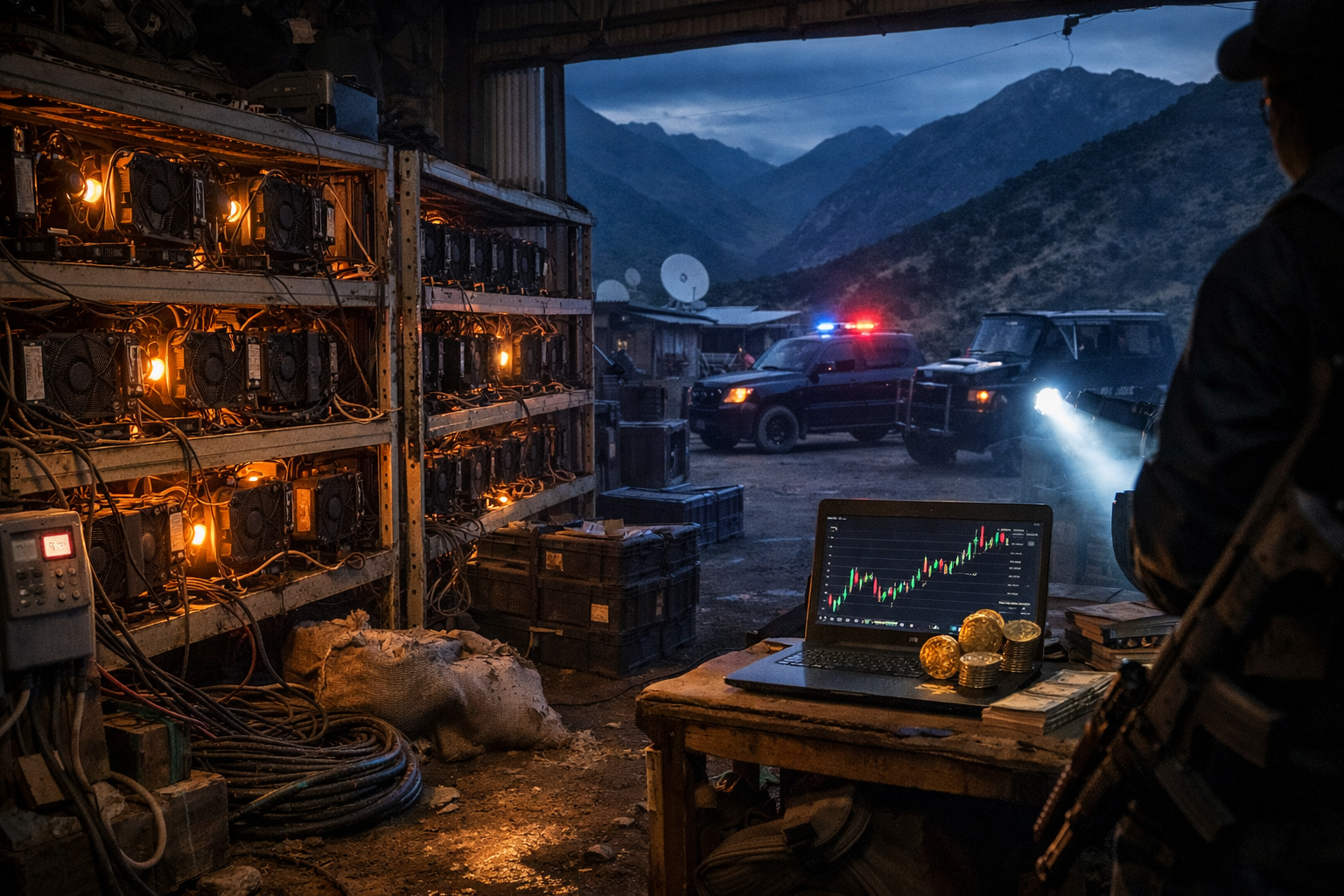

In a striking development, Mexican authorities have seized approximately 300 graphics processing units (GPUs) from a covert crypto mining facility nestled in the mountains of Tlaola, Puebla. This operation, discovered by personnel from the Attorney General’s Office, the Mexican Navy, and Puebla’s Public Security Secretariat, raises serious questions about the potential funding of criminal activities, particularly regarding drug cartels.
The facility was discovered roughly two kilometers from the nearest village, where residents reported hearing the constant mechanical noise from the mining operations up to a kilometer away. Puebla’s security chief, Francisco Sanchez Gonzalez, indicated that the site’s significant electricity consumption, combined with its remote location, prompted an investigation into suspected illicit activities in the area, particularly near the Nuevo Necaxa hydroelectric system.
Investigations into Electricity Theft
Authorities are currently scrutinizing whether the mining operation unlawfully siphoned electricity from the nearby hydroelectric dam. While investigations are ongoing, neither prosecutors nor the Federal Electricity Commission have confirmed any illegal connections as of now. Samuel Leon, an energy theft expert from Iberoamericana University, noted that if the operation was indeed stealing electricity, it would significantly reduce the operational costs associated with crypto mining.
In the first half of 2024 alone, Mexico’s Federal Electricity Commission reported over 6,346 gigawatt-hours in nontechnical losses, which includes theft and illegal connections. However, this figure does not pinpoint losses attributed to the Tlaola site.
Similar cases of electricity theft related to crypto mining have emerged in other countries as well. For instance, Malaysian authorities recently seized 73 Bitcoin miners in raids targeting electricity theft, while Thai officials confiscated nearly 1,000 Bitcoin mining machines after discovering tampered meters.
Examining Possible Cartel Connections
In addition to the investigation into electricity theft, authorities are exploring whether the cryptocurrency mined at the site was utilized for laundering money tied to cartel activities. The nature of crypto mining, which can generate newly issued coins with a clean on-chain history, makes it an attractive avenue for those looking to obscure the origins of illicit funds.
Security analyst David Saucedo commented on the technical expertise and financial resources required to operate such a facility, suggesting that a well-funded criminal organization could potentially be behind it. However, it is essential to note that no official findings or connections to specific cartels have been established at this time.
This incident marks the fourth discovery of a crypto mining site in the Puebla region since early 2025, indicating a worrying trend. Despite ongoing investigations, no arrests have been made, and no specific cartel has been publicly identified. Authorities are collaborating with neighboring states to identify and dismantle any further operations.
According to Chainalysis, illicit crypto addresses received an estimated $154 billion in 2025, a significant increase from $59 billion in 2024, primarily driven by sanctioned entities. However, it is crucial to highlight that such illicit activities still represent less than 1% of the total crypto transaction volume.
While cryptocurrency mining itself is not illegal in Mexico, the investigations are primarily focused on allegations of electricity theft and potential money laundering. As of now, no public timeline has been established for the investigation’s conclusion, and the seized machinery remains in official custody.

