

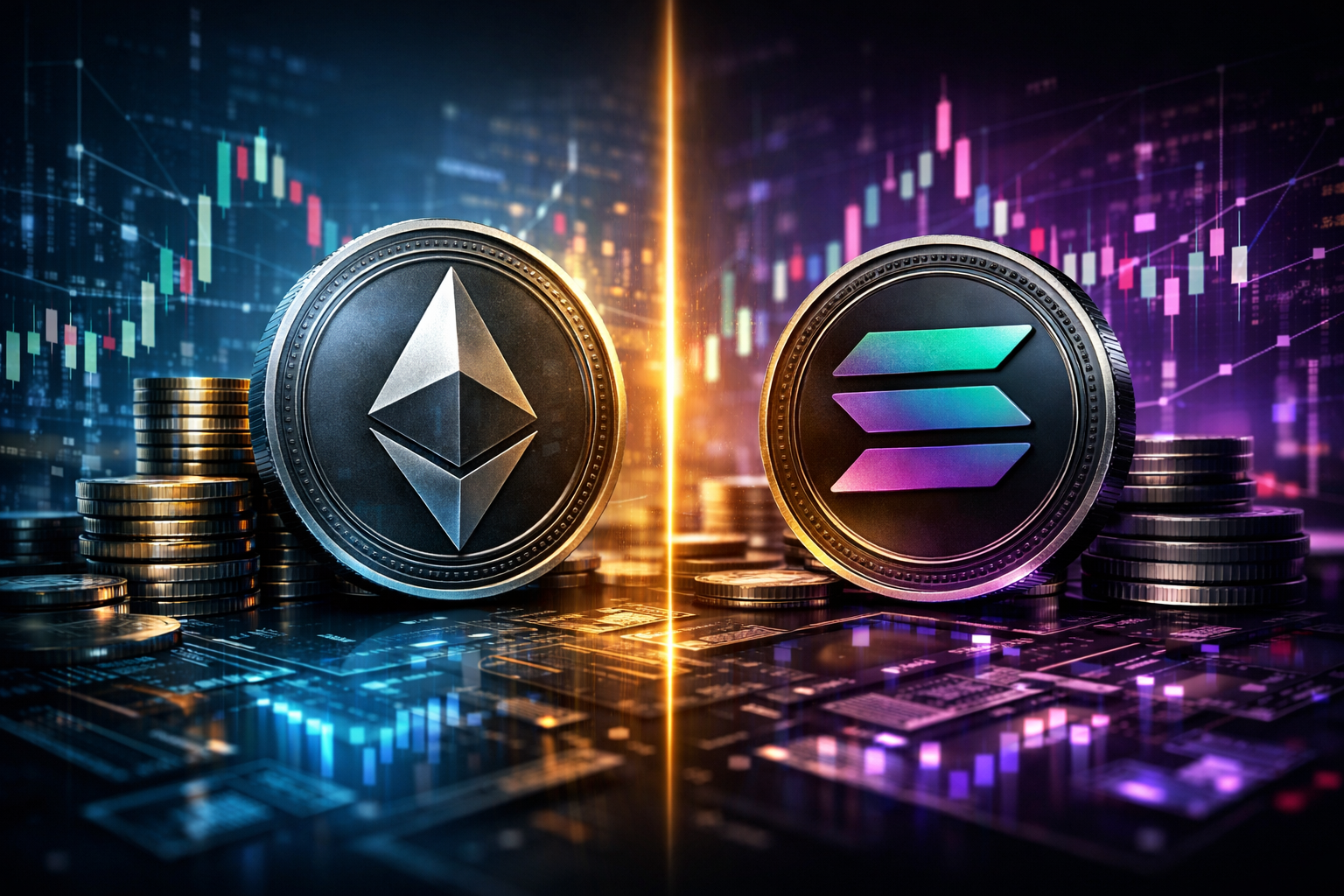

The cryptocurrency market is buzzing with debates around Ethereum and Solana, the leading smart contract platforms outside of Bitcoin. Currently, Ethereum boasts a market cap of approximately $281 billion, dwarfing Solana’s $54 billion. This significant difference in size indicates where investors place their trust for long-term growth.
In terms of on-chain activity, Ethereum leads with a staggering $164.1 billion in stablecoin value, while Solana trails with just $15.45 billion. However, Solana showcases a more robust user base with 1.67 million active addresses, surpassing Ethereum’s 565,000. Additionally, Solana briefly took the lead in decentralized exchange (DEX) trading in Q1 2026, demonstrating its growing popularity.
Ethereum’s Continuous Evolution
Ethereum is not resting on its laurels. The Ethereum Foundation recently confirmed enhancements through its Pectra upgrade, which increased blob throughput and improved validator onboarding times. The upcoming Fusaka upgrade, along with planned enhancements like Glamsterdam and Hegotá, demonstrate Ethereum’s commitment to scalability and transaction efficiency. This focus on infrastructure quality is crucial for attracting institutional investors who prioritize reliability.
In contrast, Solana is actively redefining its narrative. In March, the Solana Foundation launched a developer platform aimed at enterprises, with notable early adopters such as Mastercard, Worldpay, and Western Union. This platform facilitates tokenized deposits, stablecoins, and real-world asset transactions, signaling Solana’s ambition to establish itself as a serious player in financial infrastructure, rather than just a retail trading option.
Despite its rapid growth, Solana faces the challenge of maintaining momentum. In Q1 2026, it captured 30.6% of the DEX trading market before Ethereum reclaimed the lead in March with a 27% share against Solana’s 26%. This competitive landscape highlights Solana’s ability to generate user enthusiasm, while Ethereum tends to attract significant capital when quality infrastructure is paramount.
Assessing the Risks
Both cryptocurrencies come with their own sets of risks. Citigroup has lowered its 12-month price target for Ethereum, citing concerns over weak user activity, despite acknowledging the stability provided by its vast stablecoin market. Meanwhile, Solana’s volatility can be a double-edged sword; while it presents opportunities for high returns, it also poses risks of sharper declines during adverse market conditions.
Investors seeking a potentially higher upside with a tolerance for volatility may find Solana more appealing. Conversely, those prioritizing liquidity, institutional backing, and a proven track record may lean towards Ethereum. Both assets carry inherent risks, and neither guarantees success.
In conclusion, the choice between Ethereum and Solana ultimately hinges on individual investment strategies and risk tolerance. As the crypto landscape continues to evolve, both platforms are poised to play significant roles in shaping the future of decentralized finance.

