

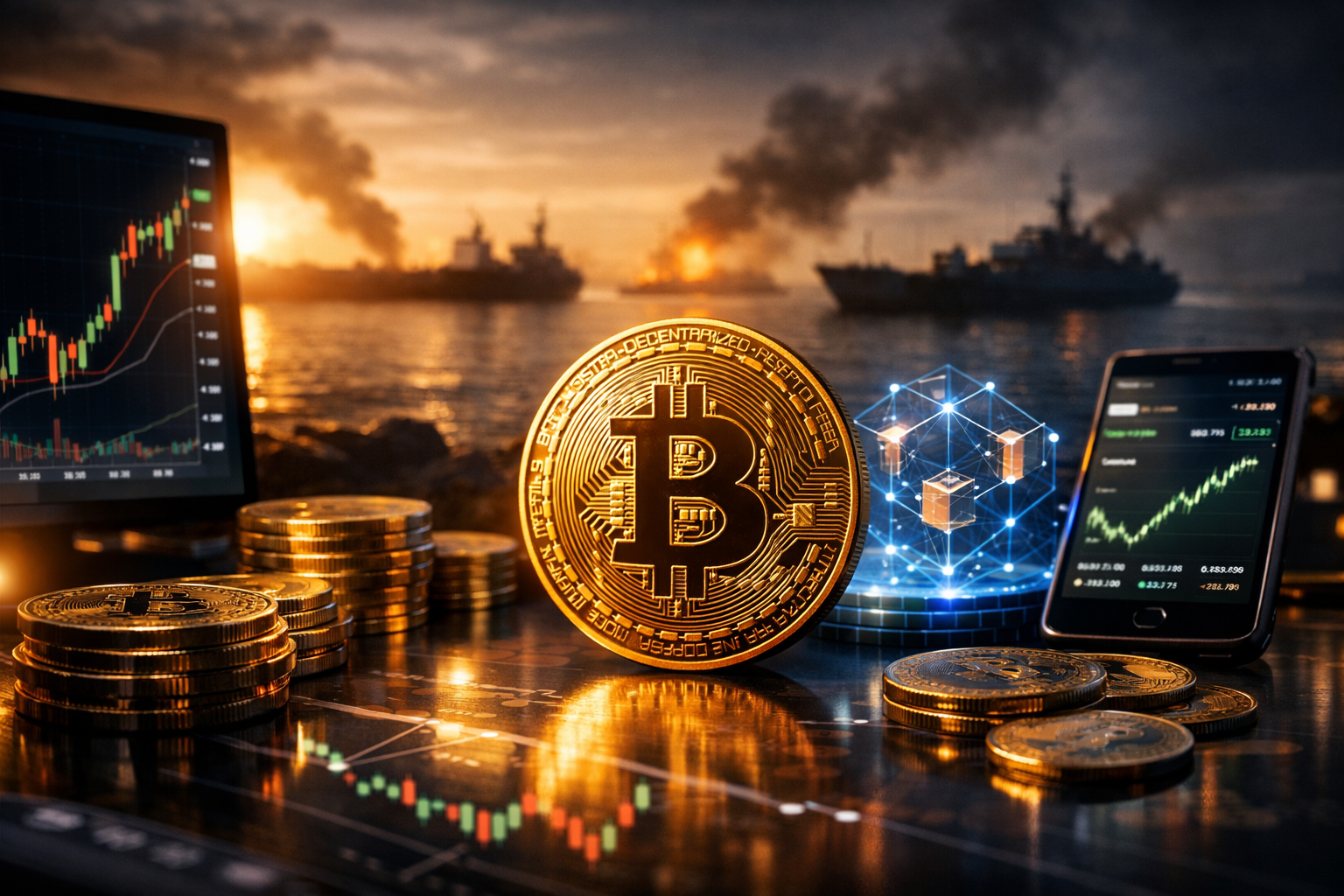

Bitcoin has shown remarkable resilience, holding steady at approximately $64,000 as renewed threats in the Strait of Hormuz have surfaced, casting a shadow over ongoing US-Iran ceasefire discussions. This geopolitical tension has sparked concerns among investors, yet Bitcoin’s price stability highlights its growing role as a haven asset.
The Strait of Hormuz, a crucial maritime corridor for global oil supplies, has been a focal point of international tensions. Recent escalations in threats from Iran have led to heightened scrutiny of US-Iran relations, affecting market sentiment across various sectors. As the situation unfolds, many investors are turning to Bitcoin, viewing it as a potential hedge against geopolitical instability.
As of June 21, 2026, Bitcoin’s price has fluctuated around the $64,000 mark, a figure that signifies its continued appeal in the face of uncertain economic conditions. The market’s reaction to geopolitical events reflects a broader shift in how cryptocurrencies are perceived. With traditional assets often susceptible to the whims of political climates, Bitcoin’s decentralized nature offers a counterbalance, attracting both institutional and retail investors alike.
Analysts speculate that Bitcoin’s price stability could be linked to a combination of factors, including increased institutional adoption and a growing acceptance of cryptocurrencies as a viable financial asset. As traditional markets react to geopolitical news, Bitcoin appears to maintain its own narrative, driven by a community of supporters who advocate for its long-term value proposition.
Investors are advised to stay informed about developments in the Gulf region, as any significant escalation could impact not only oil prices but also broader financial markets. The interplay between geopolitical events and digital currencies presents a unique opportunity for investors to reassess their portfolios in light of potential risks and rewards.
In conclusion, as Bitcoin hovers near the $64,000 threshold, the renewed threats in the Strait of Hormuz serve as a reminder of the intricate relationship between global politics and financial markets. Whether Bitcoin can continue to act as a safe haven in turbulent times remains to be seen, but its current performance certainly raises questions about the future role of cryptocurrencies in a rapidly changing world.

