

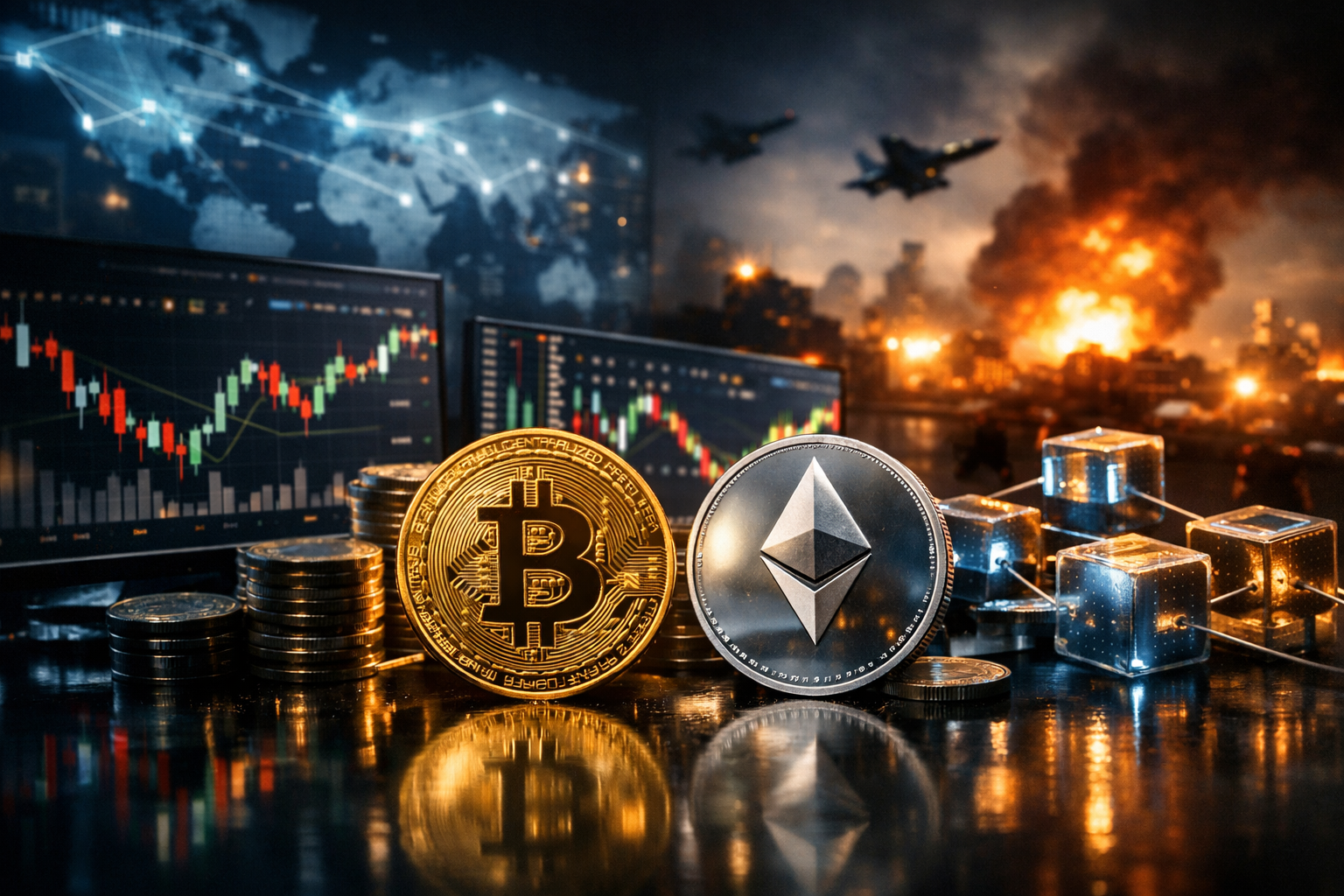

In a surprising turn of events, the cryptocurrency markets have shown remarkable resilience, with both Bitcoin (BTC) and Ether (ETH) experiencing little change even as the U.S. has initiated fresh military strikes in Iran. The ongoing geopolitical tensions have typically led to volatility in traditional markets, yet the crypto space seems to be holding steady amidst the chaos.
As of July 12, 2026, Bitcoin is trading at approximately $35,000, while Ether hovers around $2,200. These values reflect a slight fluctuation but indicate a stabilization trend that has confounded analysts. The data suggests that investors might be increasingly viewing cryptocurrencies as a hedge against geopolitical risks, much like gold has traditionally been perceived.
The decision by the U.S. government to escalate military actions has triggered a wave of concern in financial markets, yet Bitcoin and Ether’s performance could suggest a shift in investor sentiment towards digital assets. This shift could be indicative of a broader acceptance of cryptocurrencies as a viable alternative during times of uncertainty.
Many market observers are closely analyzing the implications of this stability in the face of adverse global events. “The crypto market appears to be developing a maturity that allows it to withstand shocks that would typically lead to heightened volatility,” noted one analyst. This emerging narrative is particularly interesting as it comes on the heels of increased regulatory scrutiny and institutional adoption of cryptocurrencies.
Furthermore, the current situation prompts a broader discussion about the role of cryptocurrencies in modern finance. As nations grapple with conflicts and economic sanctions, digital currencies may offer a new avenue for financial transactions that transcend traditional banking systems, appealing to those in politically unstable regions.
Investors and enthusiasts are keeping a watchful eye on the upcoming weeks. The possibility of prolonged conflict in the Middle East could create further waves in both global and crypto markets. Analysts suggest that the stability of Bitcoin and Ether might be tested should the situation escalate further.
As the geopolitical landscape evolves, it remains essential for traders and investors to stay informed about both international developments and their potential impact on cryptocurrency valuations. The current stability of Bitcoin and Ether could serve as a litmus test for the digital asset space, revealing how these currencies respond to external pressures.
In conclusion, while the world watches the unfolding events with bated breath, Bitcoin and Ether continue to chart their course, seemingly undeterred by the turbulence surrounding them. This resilience may signal a new era for cryptocurrencies, one where they are not just speculative assets but also stable stores of value in uncertain times.

