

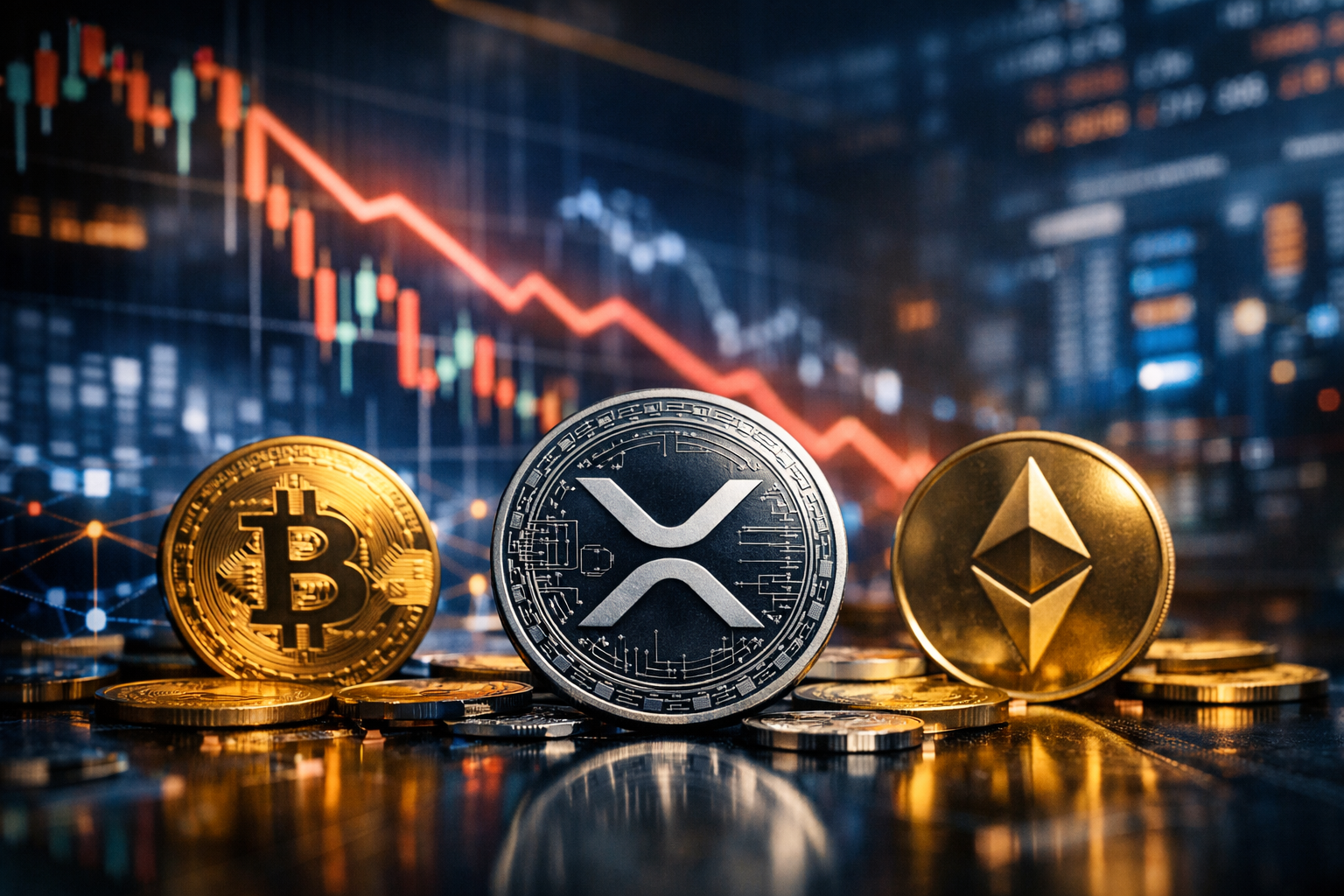

As the cryptocurrency market evolves, Bitcoin and Ether continue to dominate narratives of wealth generation, while XRP, once hailed as a major contender, finds itself lagging behind. On October 16, 2026, the conversation surrounding XRP’s struggle to elevate its holders echoes louder than ever.
XRP, the digital asset designed for seamless transactions and targeted at banks and financial institutions, had an ambitious start. It was intended to bridge the gap between traditional finance and the blockchain world, promising faster, cheaper cross-border payments. However, the reality has not mirrored the initial expectations.
One of the primary reasons for XRP’s underperformance lies in its regulatory challenges. The ongoing legal battles with the U.S. Securities and Exchange Commission (SEC) have cast a long shadow over its potential. The uncertainty surrounding its classification as a security has dampened investor confidence. While Bitcoin and Ether have established clearer narratives as decentralized assets, XRP remains entangled in regulatory red tape, which has stunted its growth and price appreciation.
Market perception plays a crucial role in the crypto landscape. Investors often flock to assets that are perceived as having the potential for exponential growth. Bitcoin, with its storied history and Ether, with its robust ecosystem supporting decentralized finance (DeFi) and non-fungible tokens (NFTs), have captured the imagination of retail and institutional investors alike. In contrast, XRP’s narrative has struggled to resonate on the same level. The lack of a compelling vision for its future, especially amid the rapid advancements in blockchain technology, has left many questioning its long-term viability.
Furthermore, the technological infrastructure of XRP, while innovative, has not evolved at the pace required to keep up with the competition. DeFi platforms built on Ethereum have captured significant market share, offering a plethora of services that enhance user engagement and investment opportunities. Meanwhile, XRP’s focus on traditional banking partnerships has limited its appeal to the broader crypto community, which increasingly values decentralization and user empowerment.
Investor sentiment is also influenced by historical performance. While Bitcoin and Ether have seen extraordinary price surges, leading to substantial returns for early adopters, XRP’s price trajectory has been more subdued. This disparity creates a psychological barrier for potential investors who may be wary of entering a market segment that has not demonstrated similar explosive growth.
In conclusion, XRP’s failure to replicate the wealth generation associated with Bitcoin and Ether stems from a combination of regulatory hurdles, market perception issues, technological stagnation, and historical performance. As the crypto landscape continues to shift, XRP will need to find a way to overcome these challenges and redefine its narrative if it hopes to regain the confidence of investors and compete effectively in an increasingly crowded market.

