

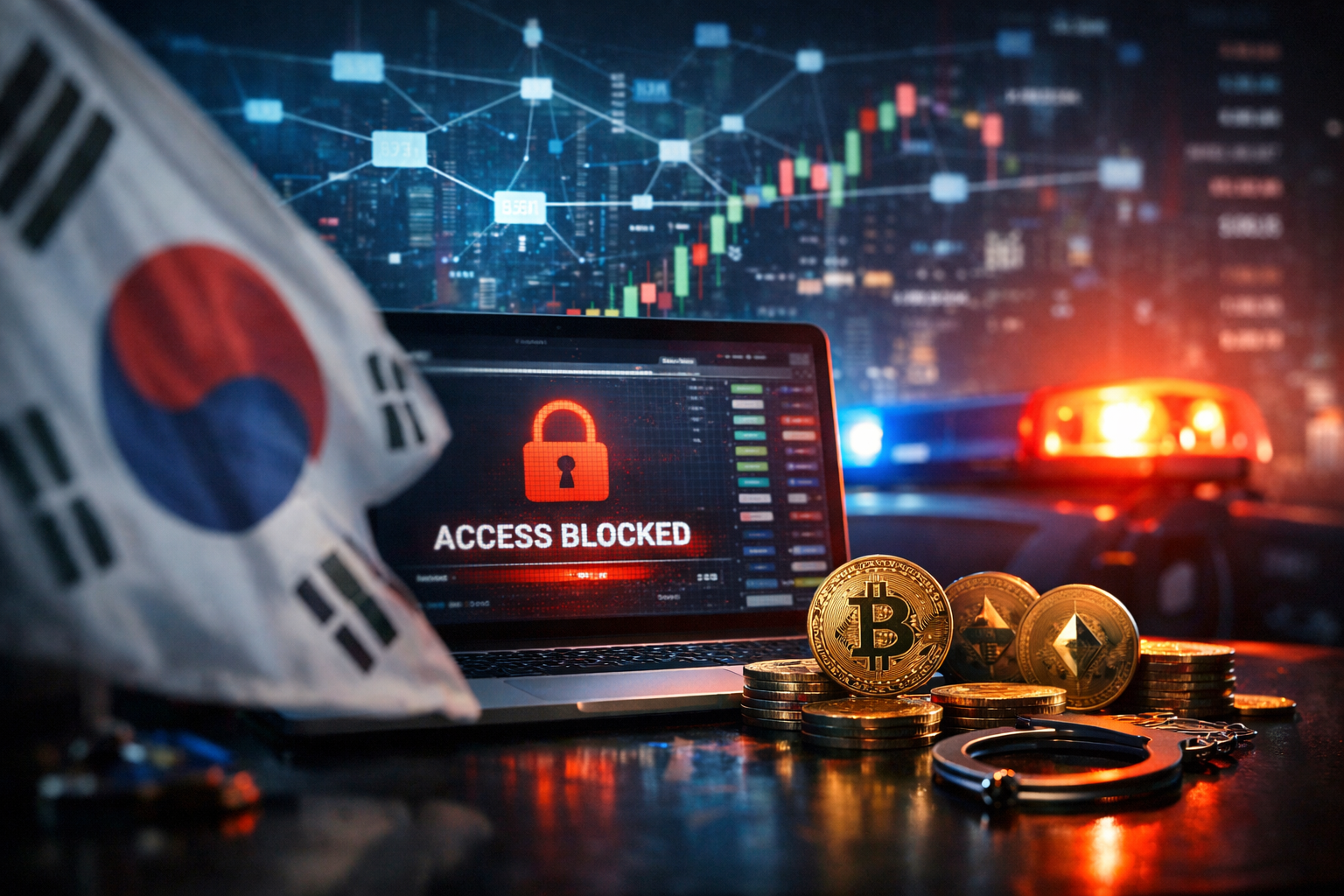

In a significant move to regulate the cryptocurrency landscape, South Korea has officially blocked access to 27 cryptocurrency-related websites, including popular exchanges KuCoin and MEXC. This decision, announced on October 13, 2026, is part of the government’s ongoing efforts to protect investors from potential scams and illegal activities associated with unregulated digital asset trading.
The South Korean Financial Services Commission (FSC) has been intensifying its scrutiny of crypto exchanges in recent months, aiming to enforce stricter compliance with local laws. The latest ban reflects the government’s commitment to safeguarding the financial interests of its citizens, particularly as the cryptocurrency market continues to evolve and attract new investors.
The banned platforms, which also include lesser-known exchanges, have been accused of failing to comply with the country’s registration requirements, which mandate that all crypto exchanges operating in South Korea must register with the FSC and adhere to strict anti-money laundering (AML) regulations.
This crackdown comes amid a broader global trend where governments are tightening regulations on cryptocurrency exchanges to prevent fraud and protect investors. South Korea, known for its vibrant crypto trading scene, has seen a surge in interest in digital assets, prompting authorities to take a more proactive stance.
Authorities have expressed concerns about the potential for investors to be exposed to high-risk assets and fraudulent schemes, particularly with the rising popularity of decentralized finance (DeFi) platforms and the proliferation of new tokens. By blocking these exchanges, the South Korean government aims to mitigate risks and provide a safer trading environment for its citizens.
KuCoin and MEXC, both of which have established a significant user base in the region, have yet to respond publicly to the blockade. However, the impact on their operations could be substantial, as South Korea remains one of the largest markets for cryptocurrency trading globally.
As the cryptocurrency landscape continues to mature, the actions taken by the South Korean government may set a precedent for other nations grappling with similar issues. The balance between fostering innovation in the digital asset space and ensuring investor protection will be a crucial challenge for regulators worldwide.
In conclusion, the blocking of KuCoin, MEXC, and other platforms underscores the urgent need for clear regulatory frameworks that can adapt to the fast-paced world of cryptocurrencies. Investors and exchanges alike will be watching closely to see how this situation develops and what it means for the future of crypto trading in South Korea.

